
Lake Apo - The secret lake of the sky
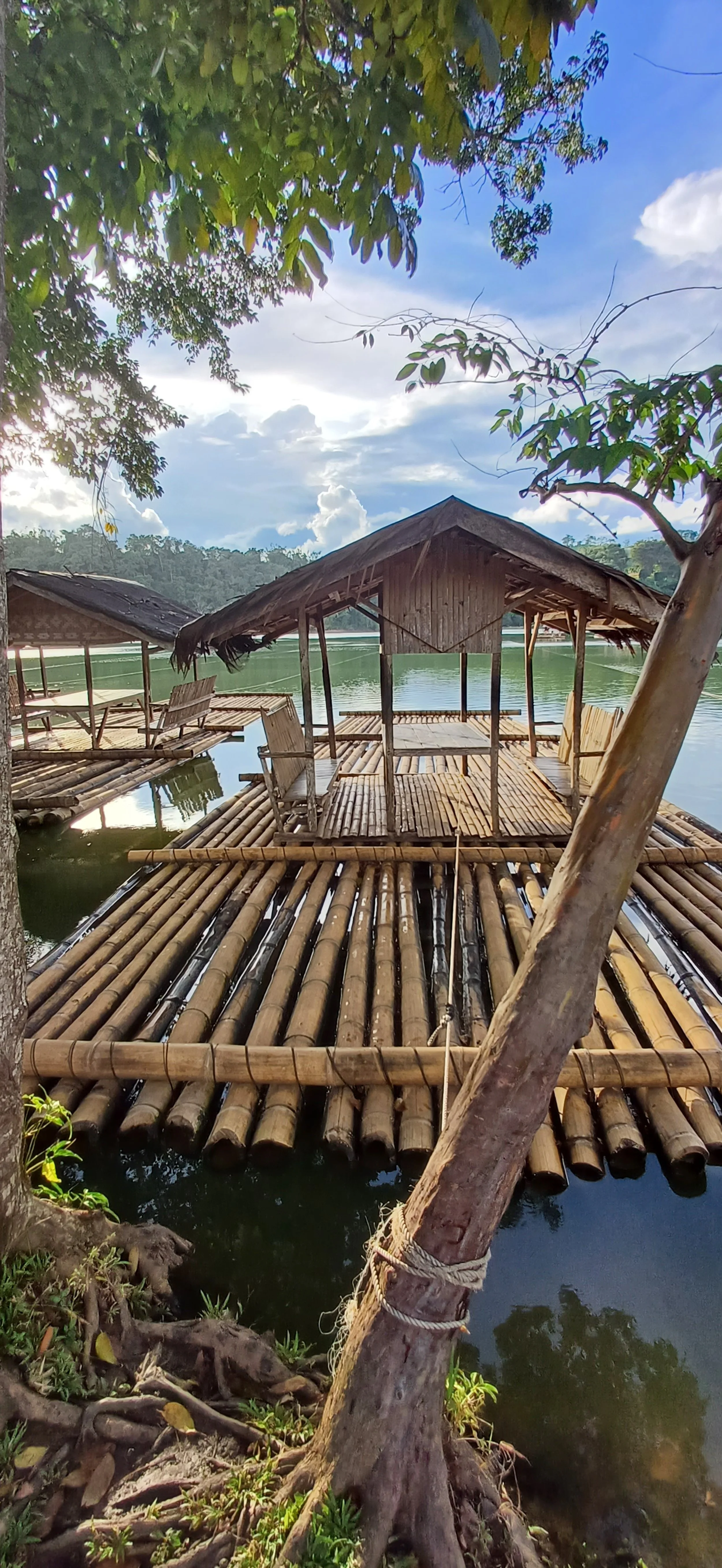
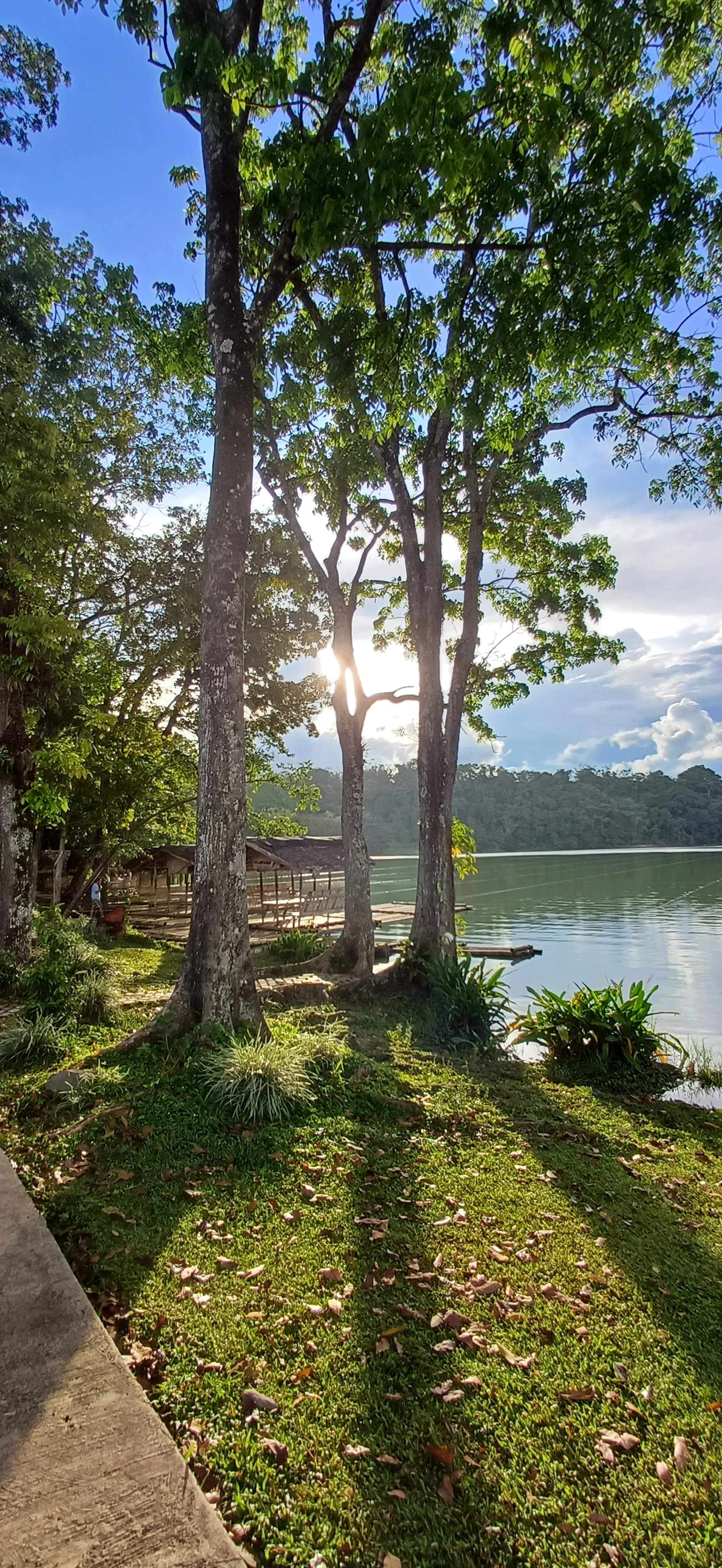
Tucked away in the rolling highlands of Northern Mindanao, there is a city that cradles a secret. Valencia City, in the province of Bukidnon, is known as the "City of Golden Harvest," a title earned from its vast seas of sugarcane and pineapple that sway in the cool mountain breeze. But beyond the agricultural abundance, beyond the bustling streets and the warm smiles of its people, lies a place of quiet magic. It’s a place where the sky dips down to kiss the earth, creating a mirror so perfect it’s hard to tell where reality ends and reflection begins.: Lake Apo.
Let’s be clear from the start. This is not the Mount Apo of Davao, the highest peak in the Philippines, a giant known to all. This is its gentler, more introspective cousin, a crater lake, a body of water born from volcanic fury and now existing in a state of profound peace. It’s a kind of place that doesn't shout for attention but whispers. Lake Apo is a story of fire, water and the resilient spirit of the land, a gem waiting to be discovered by a wider world.
A Birth from Fire: The Volcanic Origins
Every great beauty has a dramatic past, and Lake Apo is no exception. To understand this lake, you have to imagine this landscape not as it is today—lush, green, and tranquil—but as a cauldron of geological tantrums. Millions of years ago, the earth beneath what is now Valencia City was restless. The tectonic plates, those colossal puzzle pieces that form our planet's crust, were engaged in a slow, grinding dance. Beneath Bukidnon, a subduction zone was at work, where one plate was being forced beneath another. This immense pressure and friction generated unimaginable heat, melting rock into magma deep within the Earth's mantle.
This magma, being lighter than the surrounding solid rock, began its relentless ascent. It pooled in vast underground chambers, building pressure like a pot with a tightly sealed lid on a high flame. The ground above bulged and shuddered with the strain. Then, the inevitable happened. The earth could contain the pressure no longer. In a cataclysmic event that would make any modern special effects movie look tame, the volcano erupted. It wasn't a gentle burp of ash; it was a full-throated roar that spewed rock, fire, and incandescent ash high into the atmosphere, reshaping the very foundations of the land.
The eruption was likely a Plinian one, named after the Roman writer Pliny the Younger who witnessed the eruption of Vesuvius. This type of eruption is characterized by a column of superheated gas and ash that can rise for miles, collapsing under its own weight to create pyroclastic flows—avalanches of scorching gas and rock that race down the slopes at hundreds of kilometers an hour, incinerating everything in their path. When the fury was finally spent, the volcano, exhausted and emptied of its magmatic heart, could no longer support its own weight. The summit and a vast portion of the cone collapsed in on itself, creating a massive, bowl-shaped hollow—a caldera.
For centuries, this caldera was a scar, a silent testament to the earth's raw, untamed power. It was a landscape of starkness, of hardened lava and layers of volcanic ash. But nature is the ultimate artist, and it abhors a blank canvas. It is a master of redemption, specializing in creating life from destruction. Rain, the patient sculptor, began its work. Drop by drop, shower by shower, the basin filled. The volcanic soil, rich in minerals, proved to be an incredibly fertile bed for the first pioneering seeds carried by the wind and birds. Hardy grasses took root, then shrubs, and finally, trees. What was once a site of destructive heat became a reservoir of cool, life-giving water. The fire had created the vessel, and the sky had filled it. Thus, Lake Apo was born—a phoenix of water, risen from the ashes of fire.
The name "Apo" itself is a title of respect and reverence in many parts of the Philippines, often meaning "grandparent" or "elder." It signifies something ancient, wise, and worthy of veneration. The lake, with its deep, silent waters and its ancient origins, has earned that name. It is the elder of this land, a quiet observer of millennia, having witnessed the slow, patient work of ecological succession that transformed a wasteland into an oasis.
The Journey There: An Adventure in Itself
Getting to Lake Apo is part of its charm. It’s not a destination that reveals itself easily; you have to earn the view. This isn't a complaint, mind you. The best things in life are often tucked away at the end of a road less traveled. The journey is a deliberate unwinding, a gradual peeling away of the layers of modern life.
Your journey likely begins in one of Mindanao's major cities, like Cagayan de Oro or Davao. From Cagayan de Oro, you’ll head south, and the transformation begins almost immediately. The urban sprawl gives way to verdant countryside. The road starts to climb, winding its way up the Bukidnon-Iligan Road or the Sayre Highway. As you ascend, you’ll notice the air changing. It loses the thick, humid weight of the coast and gains a crisp, cool clarity that feels like a tonic for the soul. This is the Bukidnon plateau, often called the "Food Basket of Mindanao," and for good reason.
You’ll pass seas of green and gold. Vast plantations of pineapple, their spiky leaves forming geometric patterns across the hillsides, stretch as far as the eye can see. Sugarcane fields sway in the breeze, their tassels catching the sunlight. You might see the towering silos and processing plants of agri-corporations, a testament to the region's economic backbone. But look closer, and you’ll see the smaller, family-owned farms interwoven with the large-scale operations, growing maize, rice, and an abundance of vegetables. The "City of Golden Harvest" is not just a slogan; it's a reality you can see and smell from your window.
You’ll pass through the city center of Valencia—a vibrant, bustling hub of commerce and community. It has all the hallmarks of a progressive Philippine city: banks, supermarkets, universities, and a lively public market. But the lake lies beyond this urban heart, in Barangay Guinoyuran. The paved roads gradually give way to narrower, sometimes bumpy, paths that meander through communities and farmland. This is where you get a true sense of local life. You’ll see children playing a spirited game of basketball on a makeshift court, their laughter echoing. Farmers in wide-brimmed hats tend to their crops, their movements slow and practiced. You’ll pass by small, brightly painted sari-sari stores (neighborhood convenience stores) where locals gather to chat.
And then, there’s the occasional carabao (water buffalo), the timeless symbol of the Philippine countryside, taking a leisurely bath in a mudhole, looking at your passing vehicle with an expression of profound, philosophical boredom, as if to say, "All this rushing about. Why?"
As you near the lake, the anticipation builds. The houses become more sparse, the greenery denser. You park your vehicle in a designated area—a simple, unpaved lot that feels fittingly unpretentious for what you are about to witness. You begin a short, gentle walk. This is the final leg, a sensory prelude. The sound of motorcycle engines and distant chatter fades, replaced by the rustle of leaves, the chirping of unseen birds, and the whisper of the wind through the trees. The path might be lined with wildflowers, and the air carries the damp, earthy scent of the forest.
And then, you turn a corner, pass through a final gate, and there it is.
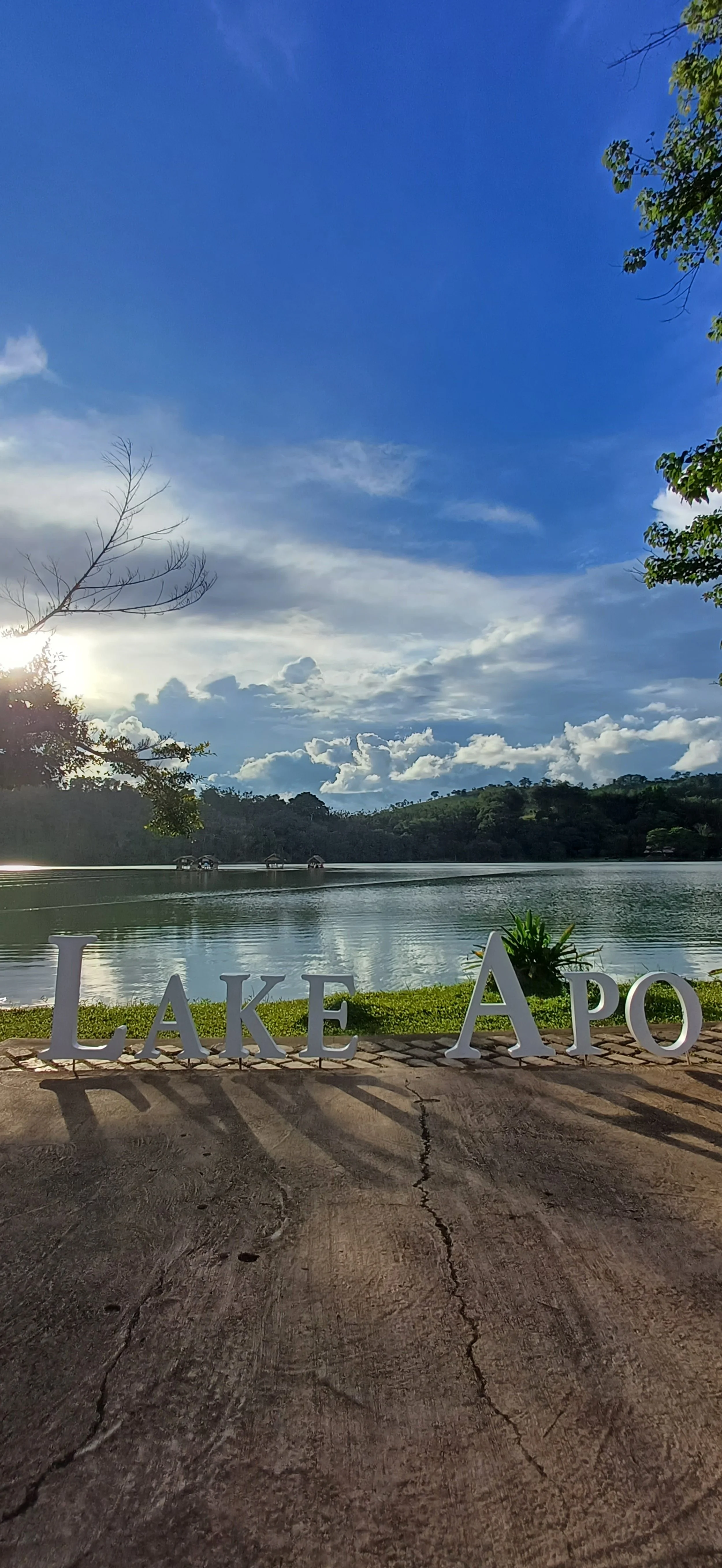
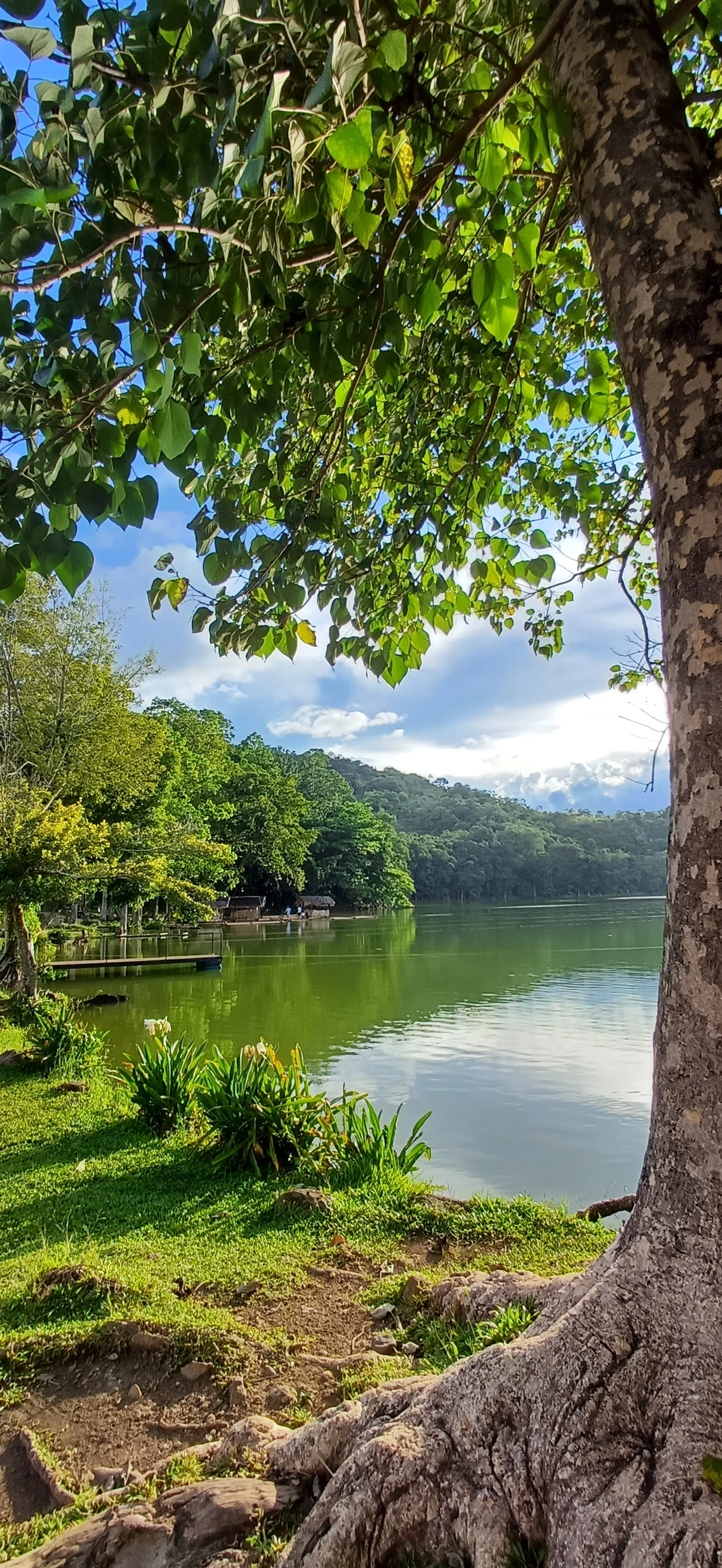
No photograph, no description, can fully prepare you for that first glimpse. It’s a moment of pure, unadulterated wonder that hits you in the chest. The lake is a massive, almost perfectly circular sheet of water, its color a stunning, impossible shade of jade green and cerulean blue, as if a giant has dropped a precious jewel into the crater. The water is so still, so impeccably calm, that it creates a flawless mirror. The sky, the fluffy cumulus clouds, the rich green foliage of the crater walls—all are duplicated on the water's surface with such precision it creates a mesmerizing, dreamlike symmetry. You find yourself in a world doubled, a place where up and down have lost their meaning. The line between the real and the reflected, the tangible and the illusion, blurs into irrelevance. You have arrived.
The Biodiversity of Lake Apo
Lake Apo is not just a pretty face; it’s a thriving, pulsating ecosystem. The lake and its surrounding forests are a sanctuary for an incredible array of life, a living library of biodiversity where every organism, from the tallest tree to the most microscopic plankton, plays a crucial role.
The Flora: A Verdant Embrace
The crater walls that cradle the lake are cloaked in a dense, emerald-green forest. This isn't a monoculture plantation but a rich, mixed secondary forest, a testament to nature's resilience. After the volcanic eruption, this was ground zero for life's return. The first colonizers were likely lichens and mosses, breaking down the volcanic rock into soil. Then came hardy grasses and ferns, their roots further fracturing the rock and adding organic matter. Over centuries, this process allowed for shrubs and, finally, trees to take hold.
Today, you can see the results of this millennia-long effort. Towering native trees like the mighty Lauan (a type of Philippine mahogany) and the resilient Molave stretch their branches towards the sky, their canopies forming a dense roof. The Molave is particularly revered for its incredibly strong and durable wood, a symbol of resilience. Beneath this high canopy, a middle layer of smaller trees and shrubs thrives, including various species of figs. The fig trees are keystone species; their fruit is a vital food source for a huge variety of birds, bats, and other animals, making them the bustling supermarkets of the forest.
The forest floor is a world of its own—a damp, shaded carpet of ferns, mosses, and delicate herbs. Look closely, and you might spot the intricate, often bizarre patterns of orchids clinging to tree branches. These are epiphytes, or "air plants," that use the trees for support but don't take nutrients from them. Their flowers are a splash of unexpected color and strange beauty, a reward for the observant eye. The air is filled with the clean, damp, slightly sweet scent of decomposing leaves and rich earth, a fragrance that city lungs yearn for. This lush vegetation is not merely decorative; it acts as a natural sponge, filtering rainwater and preventing soil erosion, ensuring the lake remains clean and the crater stable. The forest is the lake’s protector, its guardian, and in return, the lake provides the moisture and stable microclimate that allows the forest to flourish. It’s a perfect, self-sustaining partnership.
The Fauna: Wings, Fins, and Whispers in the Canopy
This is where Lake Apo truly comes alive. The lake itself is a world beneath the surface. It is home to a variety of freshwater life, though it's important to note that some species, like tilapia, are introduced. The most fascinating native resident is likely the climbing perch (Anabas testudineus), a fish that seems to have missed the memo about fish needing to stay in water. It possesses a special organ called a labyrinth organ that allows it to breathe air. During dry seasons or when its pond is overcrowded, it can use its sturdy pectoral fins to “walk” on land for short distances in search of a new home. Imagine a fish with a serious case of wanderlust, a true explorer of the animal kingdom!
But the real stars of the show are the birds. Lake Apo is a haven for birdwatchers and a casual observer alike. The lake and its forests provide a perfect combination of food, water, and shelter. As you sit quietly by the shore, you’ll be treated to a symphony of chirps, whistles, and calls. It’s a soundscape that is both chaotic and harmonious.
The most dramatic performances often come from the kingfishers. The White-throated Kingfisher, a flash of brilliant blue, chestnut, and stark white, is a common sight. It will perch motionless on an overhanging branch, its eyes fixed on the water below, before plunging in with a splash and emerging, more often than not, with a small, silvery fish in its beak. It’s a display of breathtaking precision.
High above, the Brahminy Kites, majestic birds of prey with striking white heads and chests and chestnut-brown bodies, can often be seen soaring on the thermal currents. They are the park's custodians, their sharp eyes scanning the water and the forest edges for carrion or small live prey. Their graceful, effortless flight is a lesson in aerodynamics and pure beauty.
In the surrounding forests, the chorus continues. You might hear the soft, rhythmic cooing of the Philippine Turtle Dove or the more frantic chatter of swifts and swiftlets, cutting through the air in acrobatic flight as they hunt for insects. The Philippines is famous for its endemic species—animals found nowhere else on Earth—and while the lake area may not host the most critically endangered, it is a vital part of the regional ecosystem that supports them. The forest provides a corridor for wildlife moving through the highlands.
And let’s not forget the smaller, often overlooked residents. The area is home to a variety of butterflies, from the large and stately Common Mormon (Papilio polytes), with its elegant black wings and splash of white and red, to the tiny, jewel-like Gram Blue (Euchrysops cnejus), a flicker of silver and brown in a sunbeam. Lizards are everywhere. The common garden skinks, like the Bowring's Supple Skink, dart through the leaf litter, while the larger monitor lizards (locally called hiko or bayawak), though shy and rarely seen, are the ancient dragons of this realm, powerful reminders of a prehistoric past.
The forest at night undergoes a shift. The diurnal birds fall silent, and a new cast of characters emerges. Frogs and toads begin their choruses, a cacophony of croaks, peeps, and trills that is the very sound of a healthy wetland. Insect life becomes more apparent, with the mesmerizing flicker of fireflies (if you're lucky) adding a touch of magic to the darkness. The forest is a complex, 24-hour network of life, each creature, from the largest raptor to the smallest midge, playing its part in the intricate dance of the ecosystem, a dance that ensures the continued health and wonder of Lake Apo.
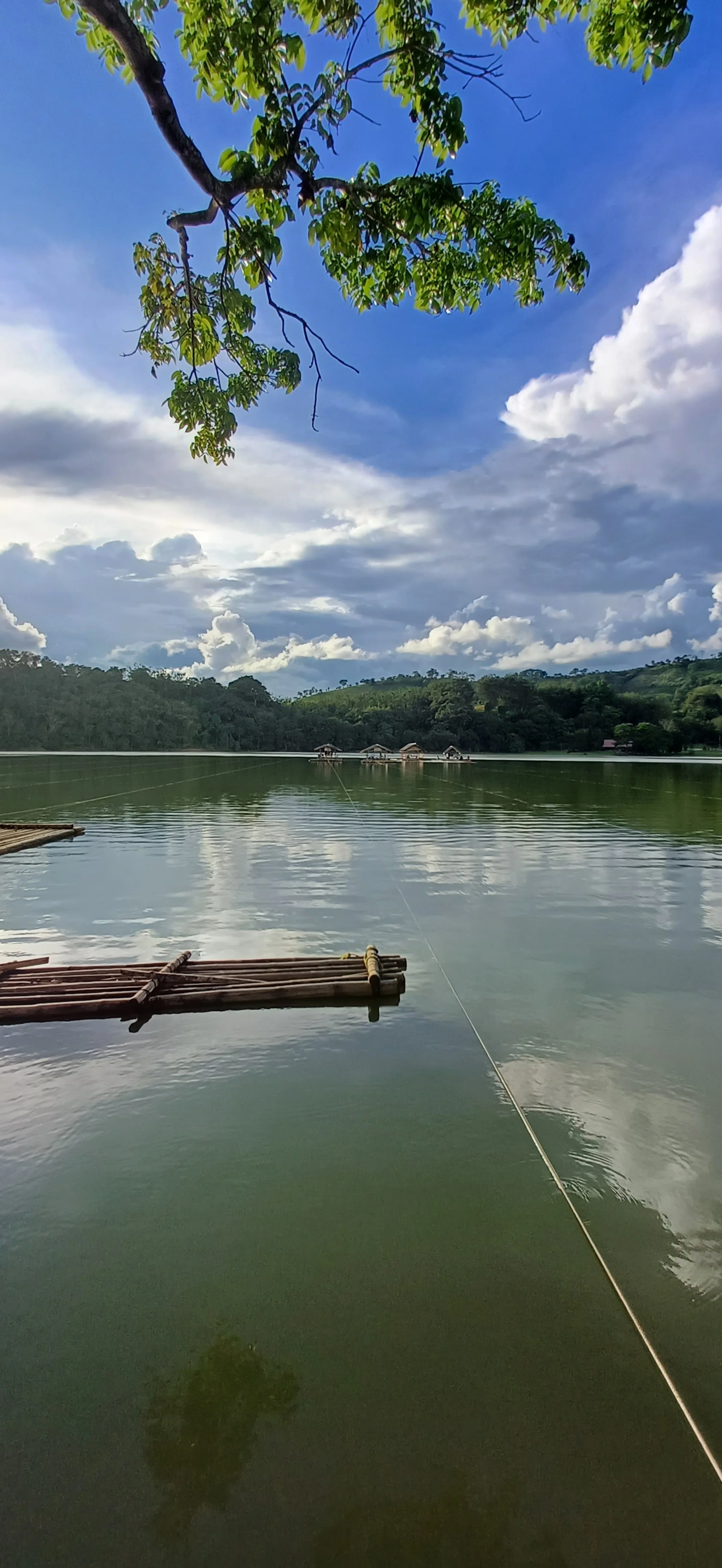
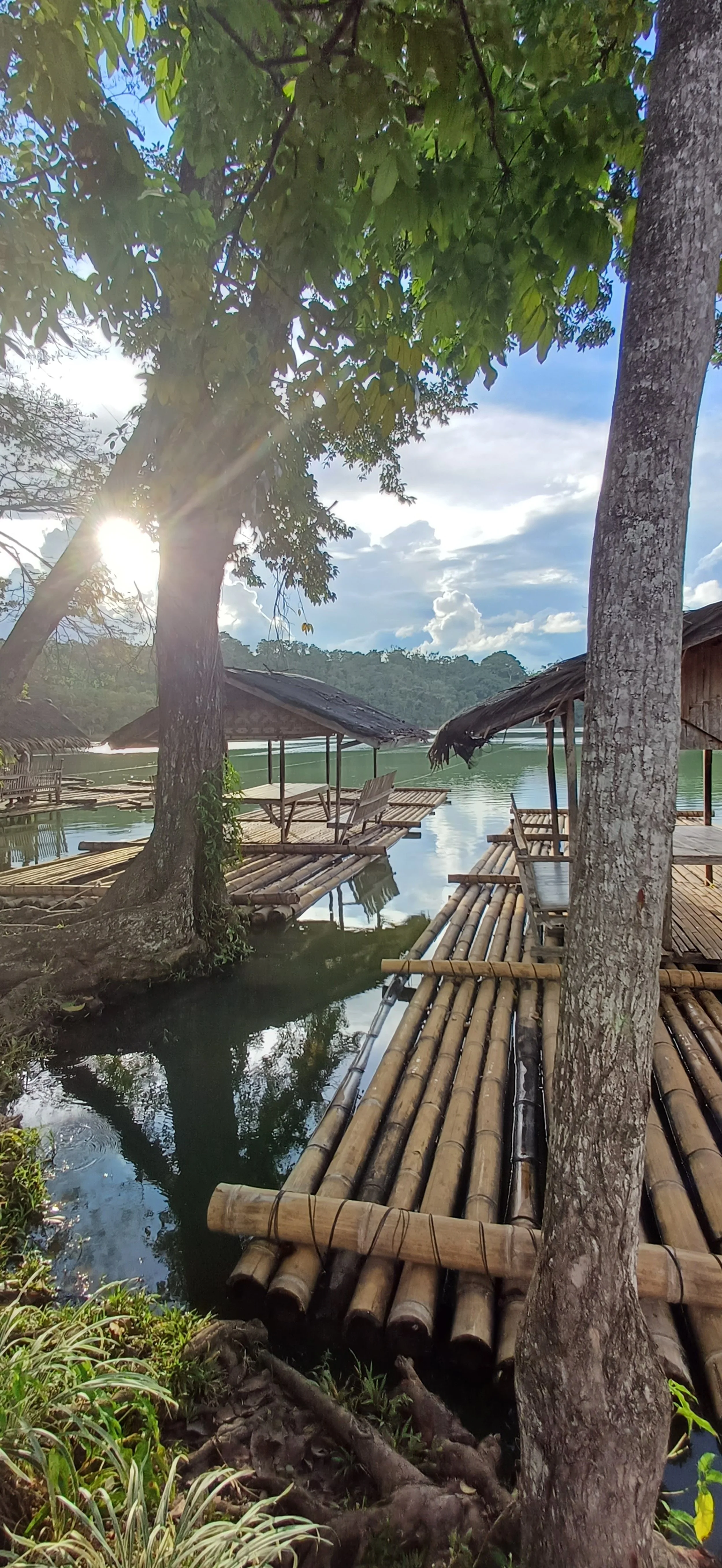
The Human Element: Community and Culture
A place is more than its geology and biology; it’s about the people who call it home and the stories they tell. The communities surrounding Lake Apo, primarily in Barangay Guinoyuran, are not just its neighbors; they are its stewards, its storytellers, and its soul. Their relationship with the lake is not one of mere proximity but of deep, cultural connection that spans generations.
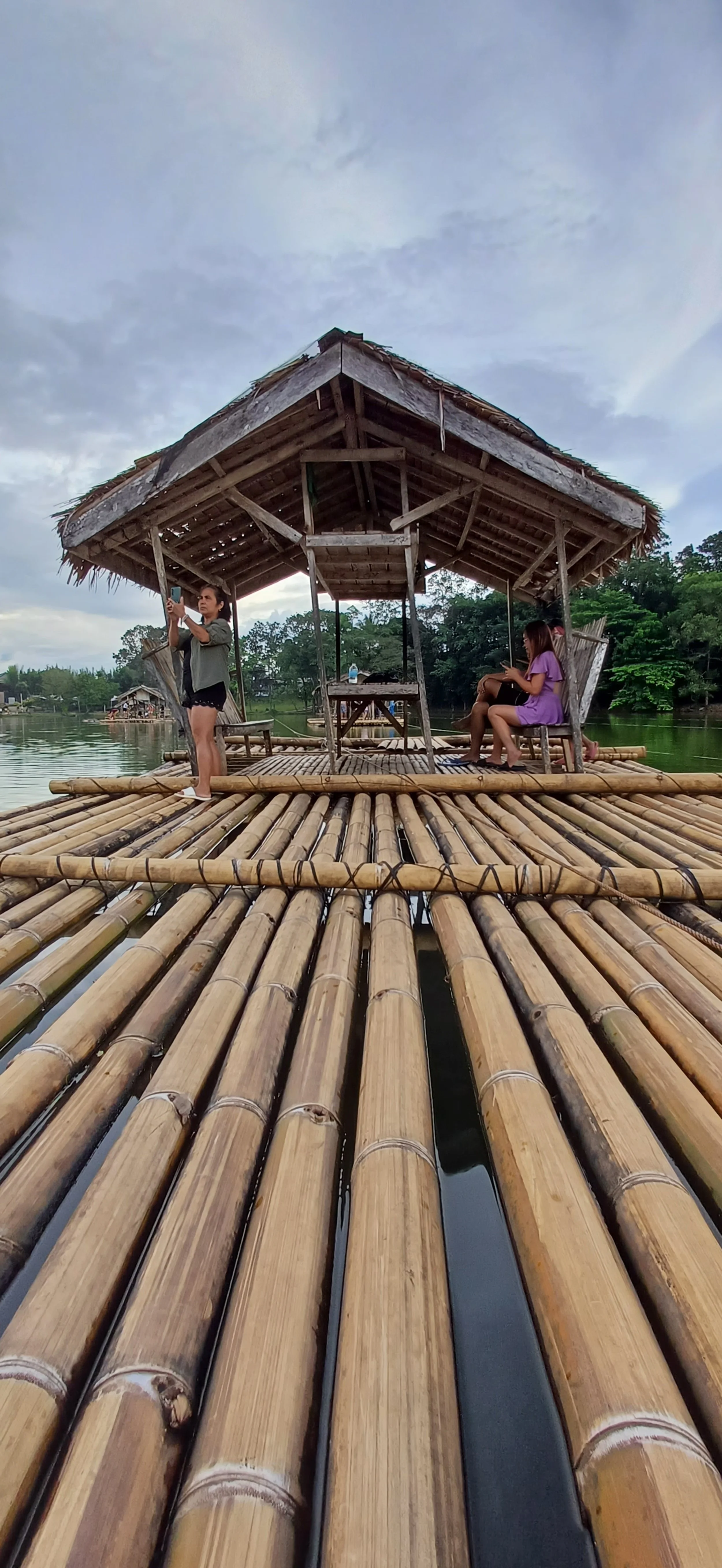
For as long as anyone can remember, the lake has been a source of sustenance. Before tourism, it was primarily a fishing ground. Families would cast their nets or lines from small, handmade bamboo rafts, catching enough for their dinner and sometimes a little extra to sell in the local market. They used traditional methods that were, by their nature, sustainable, ensuring the fish population remained healthy for the future. The fertile volcanic soil around the crater has been used for farming, providing a livelihood for many. The lake is woven into the local identity, featuring in stories told by grandparents and in the daily lives of the children who grow up in its shadow. It is their playground, their classroom, and their sanctuary.
With such a deep connection, it's no surprise that local lore is rich with stories about the lake. While not as commercially mythologized as other Philippine landmarks, the elders speak of the lake with a sense of reverence. Some whisper that the lake is bottomless, its depths connecting to the ocean or to a spiritual underworld. Others tell stories of diwatas (nature spirits) or engkantos (enchanting spirits) that guard the lake, benevolent but easily offended. There are tales of a large, serpent-like creature, a bakunawa, that resides in the deepest parts—a common mythological motif in the Philippines that speaks to a primal awe of deep water. Whether these stories are literally believed or not, they serve a vital purpose: they encode a message of respect. They are cultural mechanisms that remind people to treat the lake with care, to not pollute its waters, or to behave boorishly on its shores, lest they disturb the unseen guardians.
In recent years, with the growth of domestic tourism, the community has embraced a new role: that of protectors and guides. The development around the lake has been largely community-driven, a conscious choice to avoid the pitfalls of uncontrolled commercialization seen in other tourist spots. The local government unit (LGU) of Valencia City, in partnership with the Barangay, has implemented guidelines to ensure sustainable and eco-friendly tourism.
The cottages you see, the paddle boats you can rent, the guided tours—many of these are managed by local cooperatives and families. This is a crucial point. It means that the money you spend as a tourist goes directly back into the community, funding children's education, family healthcare, and further conservation efforts. When you pay a local teenager to rent a life vest, or buy a snack from a mother running a small stall, or hire a guide who shares his knowledge of the forest, you are participating in a virtuous cycle. You are not just a consumer; you are a patron of local conservation.
This symbiotic relationship—where tourism supports the community, and the community, in turn, protects the lake—is the model that ensures Lake Apo will remain pristine for generations to come. The Valencianos are proud of their natural treasure, and this pride is evident in the way they maintain the area and interact with visitors. They are eager to share it with respectful guests, and their warmth and hospitality are as memorable as the lake itself. When you visit, you are not just a tourist; you are a guest in their home.
Things to See and Do: More Than Just a View
While the primary activity at Lake Apo is to stand in awe of its beauty, there are several ways to immerse yourself in the experience.
The Viewdeck: The Iconic Shot. Your first stop will inevitably be one of the view decks. These strategically located platforms offer the postcard-perfect view of the lake in its entirety. This is the place to take that quintessential photo, to just sit on a bench with a loved one, and to let the sheer scale and beauty of the place wash over you. As the sun moves across the sky, the colors of the lake change from a bright, vibrant green in the midday sun to deeper, more mysterious shades of blue and violet as the afternoon wears on.
Paddle Boating: Becoming Part of the Reflection. To truly appreciate Lake Apo, you must get on the water. Renting a paddle boat (or a kayak, if available) is an absolute must. As you push off from the shore and glide onto the glassy surface, you become part of the reflection. The sensation is surreal. With every stroke of the paddle, you create gentle ripples that distort the mirrored world, sending the clouds and trees shimmering. It’s a peaceful, almost meditative activity. Paddle to the center of the lake, stop, and just float. The silence is profound, broken only by the sound of your own breath and the distant call of a bird. It’s in these moments that you feel a deep, personal connection to this ancient place.
The Zipline: A Bird’s Eye View. For the more adventurous, a zipline offers a completely different perspective. Strapped securely into a harness, you’ll fly from one side of the crater to the other, high above the lake. The view from above is breathtaking. You see the perfect circularity of the lake, the dense forest canopy, and the vast expanse of Bukidnon’s landscape beyond the crater rim. It’s a thrilling minute that gives you the wings of the Brahminy Kite you saw soaring earlier.
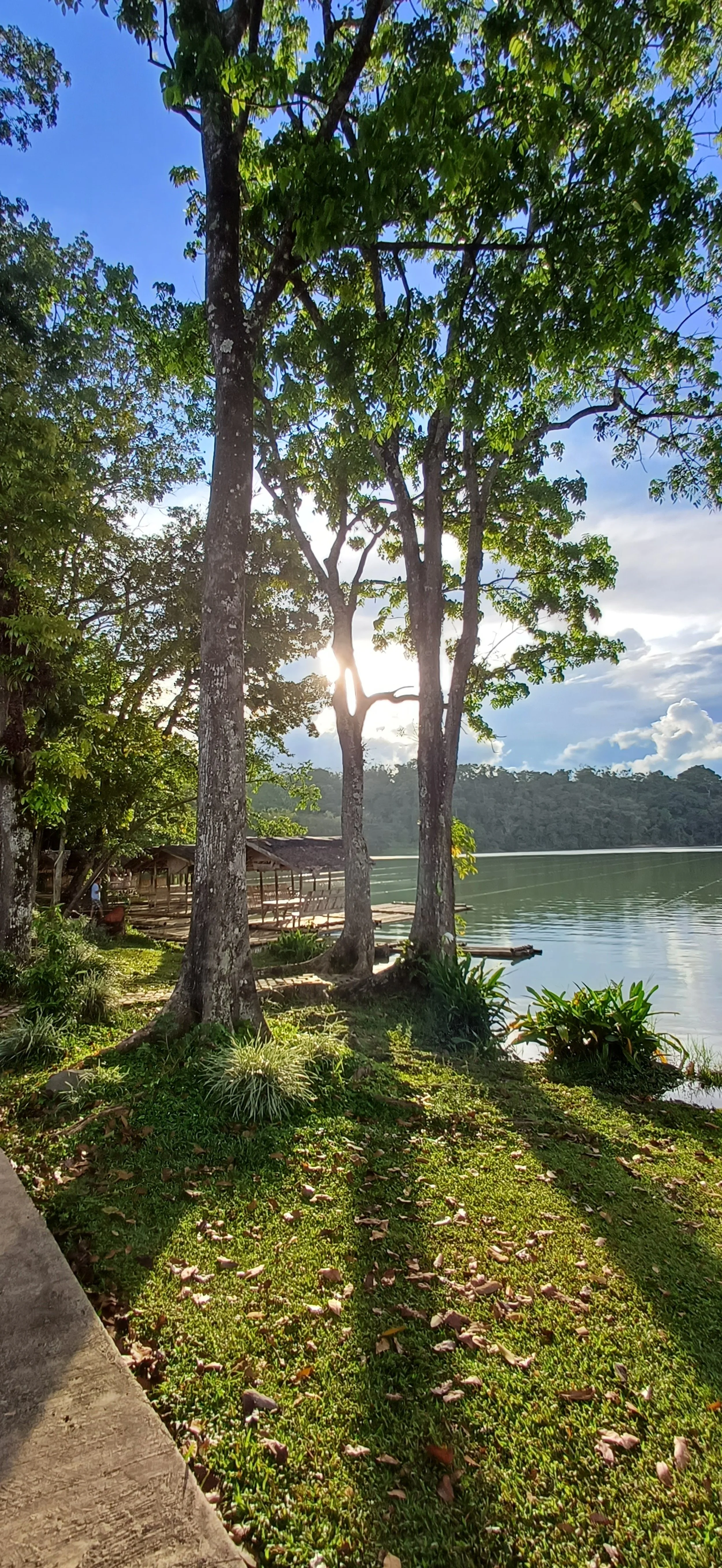
Picnics and Leisurely Strolls. The lakeshore is dotted with picnic huts and open spaces, making it an ideal spot for a family outing or a romantic picnic. The local vendors often sell snacks and refreshments. Enjoy a simple meal with one of the best views in the Philippines as your backdrop. After eating, take a leisurely walk along the designated paths. Breathe in the fresh air, listen to the forest, and keep your eyes peeled for the local wildlife.
Fishing with the Locals. While primarily for tourism now, you can sometimes see or even try your hand at the traditional methods of fishing used on the lake. It’s a humble activity that connects you to the lake’s history as a source of sustenance.
Swimming (with a note of caution). Swimming is sometimes allowed in designated areas, but it's always best to check with the local authorities or your guide about the current conditions. The lake is deep, and the water can be cold, so caution is advised. There’s nothing quite like taking a dip in the clear, cool waters of a volcanic crater, feeling the same water that has rested there for millennia.
A Final Whisper
Lake Apo is more than just a pin on a map or a destination to check off a list; it’s an experience that lingers. It’s a lesson in geology, a living showcase of biodiversity, a testament to community spirit, and, most importantly, a sanctuary for the human soul. In a world that often moves at a dizzying, frantic pace, it offers a rare and precious gift: a moment of pure, unadulterated stillness.
It’s a place to disconnect from the constant ping of notifications and the blue glow of screens and to reconnect with the fundamental, ancient rhythms of nature. It’s a place to remember what silence sounds like, to feel the sun on your skin and the wind in your hair without distraction. The lake, in its immense, quiet presence, holds up a mirror not just to the sky, but to ourselves, inviting a moment of introspection and peace.
So, when you find yourself planning a trip to the Philippines, look beyond the famous beaches of Boracay and the well-trodden paths of Palawan. Be bold. Venture into the highlands of Bukidnon. Make your way to the "City of Golden Harvest," Valencia City. Ask a local for directions, follow the road that narrows into a path, and seek out the secret lake of the sky.
Sit by its shores and just breathe. Glide across its mirror-like surface and feel your worries dissolve into the ripples. Listen to the whispers of the ancient forest and the stories carried on the mountain wind. Let Lake Apo work its quiet, persistent magic on you. You’ll leave not just with photographs stored on a phone, but with a feeling, a sense of calm, a piece of its profound peace forever etched in your memory. And that is a souvenir more valuable than any other.