
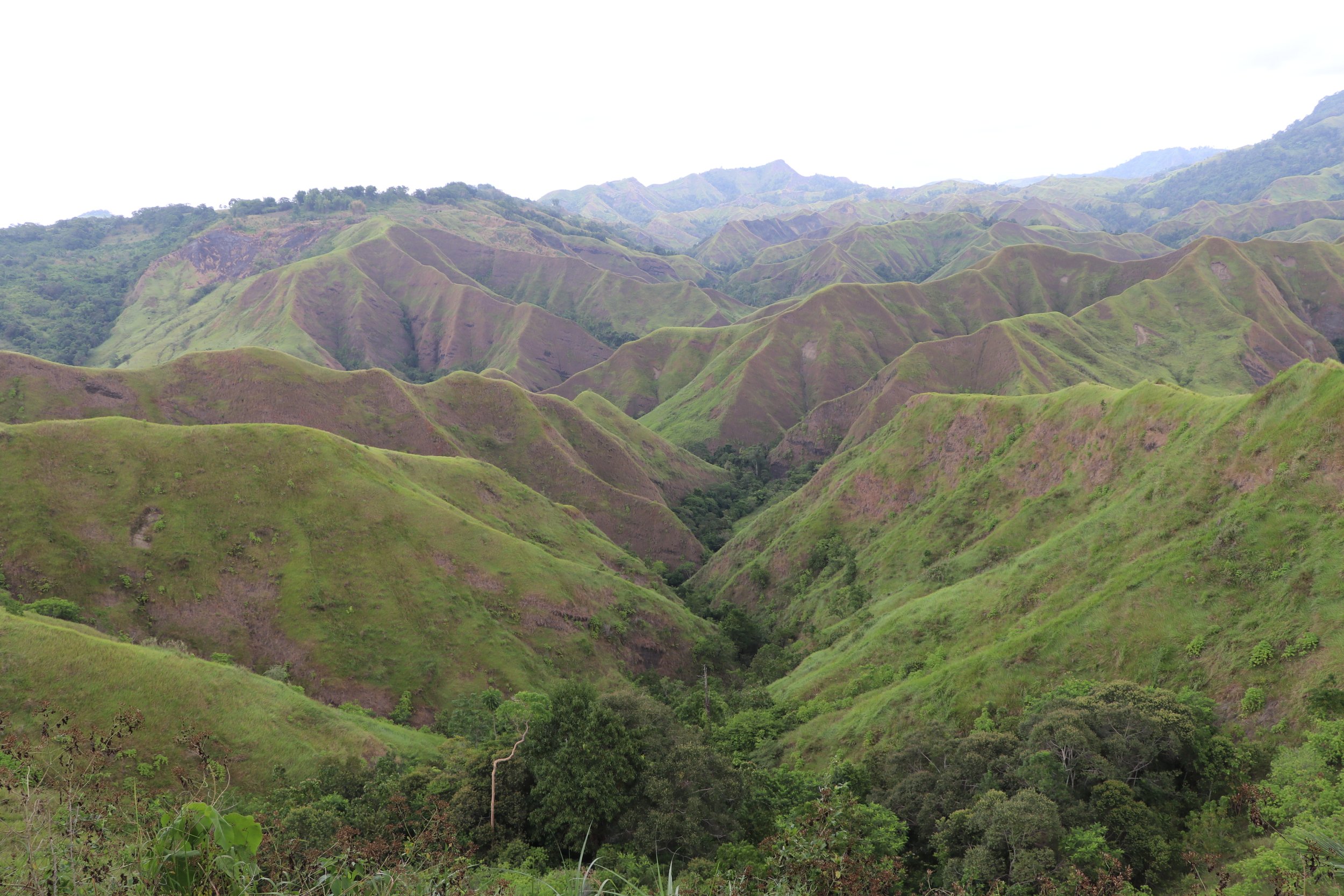
The Grand La Palmera Mountain Ridge
Mindanao’s Hidden Symphony of Hills and Palms
There is a peculiar kind of magic that happens when you leave the paved roads behind. The hum of city tires on asphalt fades, replaced by the crunch of gravel and the gentle sway of a vehicle navigating terrain that nature intended to remain wild. It is on these paths, in the heart of Sultan Kudarat, Mindanao, that one finds the reward for their curiosity: The Grand La Palmera Mountain Ridge.
Tucked away in the municipality of Datu Paglas, near the boundary of Columbio, this isn't just a viewpoint; it is an experience. It is a place where the earth seems to breathe, its ribcage of rolling green hills rising and falling against a sky punctuated by the feathery crowns of oil palms. For the uninitiated, the name "La Palmera" might evoke images of a polished Spanish resort. In reality, it is something far better: a raw, authentic slice of the Philippine countryside that has, until recently, remained a whispered secret among local adventurers . To stand atop the Grand La Palmera is to understand why travelers often compare it to the iconic landscapes of Batanes or even the pastoral scenes of New Zealand. The vista is a sprawling canvas of cogon grass swaying in the wind like waves on a golden-green sea, punctuated by the sculpted symmetry of palm plantations that descend into the valleys below . But this ridge is more than just a pretty face; it is a story of community, livelihood, and the slow, steady opening of a destination that asks for a little effort in exchange for a lot of soul.
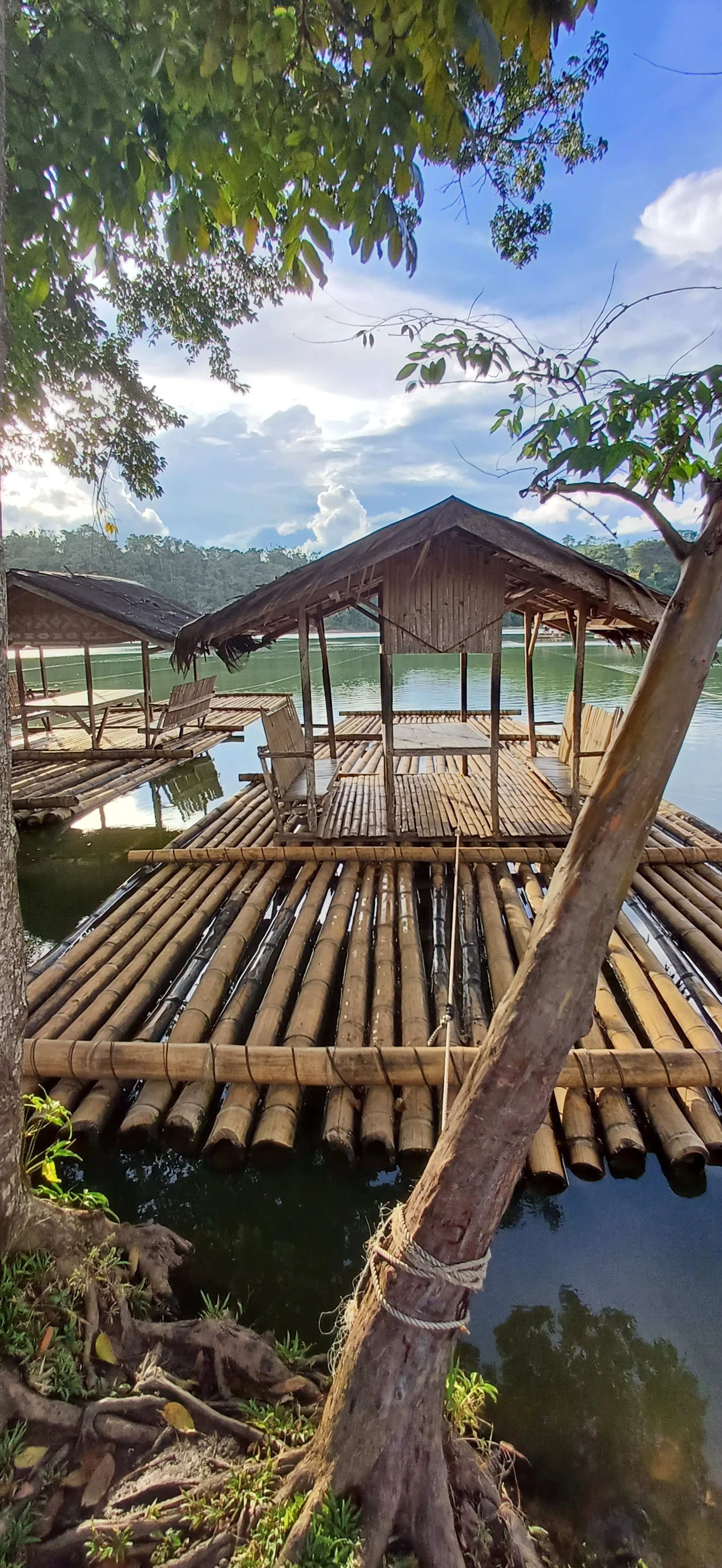
Lake Apo - The secret lake of the sky
The secret lake of the sky
Tucked away in the rolling highlands of Northern Mindanao, there is a city that cradles a secret. Valencia City, in the province of Bukidnon, is known as the "City of Golden Harvest," a title earned from its vast seas of sugarcane and pineapple that sway in the cool mountain breeze. But beyond the agricultural abundance, beyond the bustling streets and the warm smiles of its people, lies a place of quiet magic. It’s a place where the sky dips down to kiss the earth, creating a mirror so perfect it’s hard to tell where reality ends and reflection begins.: Lake Apo.
Let’s be clear from the start. This is not the Mount Apo of Davao, the highest peak in the Philippines, a giant known to all. This is its gentler, more introspective cousin, a crater lake, a body of water born from volcanic fury and now existing in a state of profound peace. It’s a kind of place that doesn't shout for attention but whispers. Lake Apo is a story of fire, water and the resilient spirit of the land, a gem waiting to be discovered by a wider world.

Communal Ranch - Bukidnon
A Landscape of Grandeur and Contradiction
Nestled in the undulating highlands of North-Central Mindanao, the Province of Bukidnon presents a tableau of arresting contrasts. It is a land where the geometric precision of vast, corporate-owned pineapple and sugarcane plantations collides with the primordial chaos of mist-shrouded rainforests, and where the brisk, cool air carries the simultaneous whispers of ancient animist spirits and the bustling commerce of a modern agricultural powerhouse. Within this complex tapestry, one particular landscape emerges not merely as a geographical feature, but as a profound cultural and ecological statement: the Bukidnon Communal Ranch. Encompassing approximately 22.000 hectares of sprawling, predominantly open grasslands in the municipalities of Valencia and San Carlos.

The Moringa Miracle
Unearthing the Astonishing Story of the Moringa Tree
If you were to ask a botanist, a nutritionist, a doctor, and a grandmother from the Philippines to name the most useful plant on earth, you might be surprised to get the same one-word answer from all of them, albeit in different languages: malunggay, drumstick tree, horseradish tree, ben oil tree, the tree of life. However the most common name is simply Moringa.
This is not the story of a rare, exotic plant hidden deep within

Mount Apo
Mount Apo: The Crown Jewel of the Philippines - The Kingdom in the Clouds
If the Philippine archipelago were a royal court, its 7,000-plus islands a gathering of nobles in silken green and blue, then its mountains would be the ancient, peerless aristocracy. They are the silent sentinels of history, the bones of the earth around which life and legend have swirled for millennia. And presiding over them all, from a throne of mist, volcanic rock, and primordial forest, is the grand patriarch, the silent sovereign: Mount Apo. This is not merely a mountain; it is a kingdom. A sprawling, 64,000-hectare realm of absurd biodiversity, surreal landscapes and whispers of creation that rustle through the canopy. To label it a "national park" feels almost diminutive, it is a continent in miniature, a sovereign state of nature, a living, breathing entity that has watched over the island of Mindanao since time immemorial. This article endeavors to explore the profound intricacies of Mount Apo Natural Park, moving

The Manobo Tribal Groups of Mindanao
The Unyielding Whisper: A Comprehensive Exploration of the Manobo Tribal Groups of Mindanao
The archipelago of the Philippines, often visualized through the prism of its sun-drenched beaches and bustling urban centers, holds within its southernmost island, Mindanao, a narrative of profound antiquity and cultural complexity. Beyond the contemporary headlines and the homogenizing forces of globalization, Mindanao remains the spiritual and territorial heartland for a multitude of indigenous peoples, among whom the Manobo constitute one of the most significant and diverse ethnolinguistic constellations.

Kadayawan Festival
Kadayawan: A Symphony of Gratitude in Davao – An Academic and Cultural Exploration
The city of Davao, cradled by the vast expanse of the Davao Gulf and standing in the formidable shadow of Mount Apo, the Philippines’ highest peak, is a study in contrasts. It is a bustling metropolis, a hub of commerce and governance in Southern Mindanao, yet its soul remains inextricably woven into the lush, verdant tapestry of the land and the ancient cultures that have nurtured it for millennia. For fifty-one weeks of the year, this duality hums at a steady, productive frequency. But in the third week of August, this hum erupts into a full-throated, ecstatic roar.

A journey into the heart of the Banaba tree
The Sweetness Regulator: How an Ancient Tree Is Answering Modern Health Prayers
In the dappled light of a tropical morning, where the air hangs thick with the scent of damp earth and blooming frangipani, a quiet monarch holds court. It does not demand attention with the gaudy brilliance of a flame tree or the towering dominance of a kapok.

The Agusan Marsh Wildlife Sanctuary
The Agusan Marsh Wildlife Sanctuary: A Legacy of Water, Life, and Culture in the Heart of Mindanao - The Pulsing Heart of the Agusan Basin
In the vast, low-lying expanses of the Agusan River Basin in northeastern Mindanao-Philippines, lies one of the most significant and ecologically unique wetland ecosystems in Southeast Asia: the Agusan Marsh Wildlife Sanctuary. Encompassing a vast, dynamic landscape of approximately 110.000 hectares during the rainy season, the marsh is not a static body of water but a living, breathing entity, a complex hydrological system that expands and contracts with the rhythms of the monsoon. It is a place where the very concepts of "land" and "water" are fluid, where entire forest islands float and where human communities have developed a sophisticated culture intrinsically tied to the ebb and flow of the floodwaters.
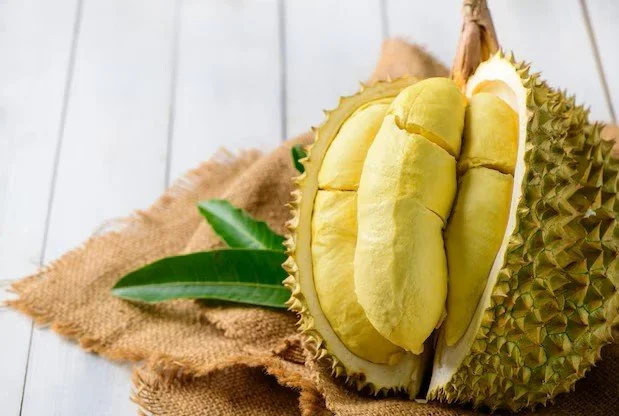
Durian-The king of fruits
The King of Fruits: A Tale of Thorny Splendor, Heavenly Taste, and Davao’s Crown
There is a fruit that does not simply grow; it announces its presence with the solemn, weighty authority of a monarch. To cross its path is to have an opinion, often fiercely held. It is a fruit that has been described, with equal parts reverence and disgust, as smelling like hell but tasting like heaven.

The Tinikling Dance
The Tinikling: An Interdisciplinary Analysis of its Historical Genesis, Ethnolinguistic Specificity, and Cultural Semiotics as a Philippine Art Form
The Tinikling dance of the Philippines stands as one of the most visually arresting and culturally resonant artistic traditions to emerge from Southeast Asia. To the global audience, it is a spectacle of grace and danger: dancers nimbly evading the rhythmic clap of bamboo poles, their movements a synchronous dialogue with sound and potential peril. However, to reduce the Tinikling to its performative aesthetics is to overlook its profound significance as a living artifact of Philippine history, a locus of ethnolinguistic identity, and a dynamic, evolving practice of cultural expression.